Imagine this.
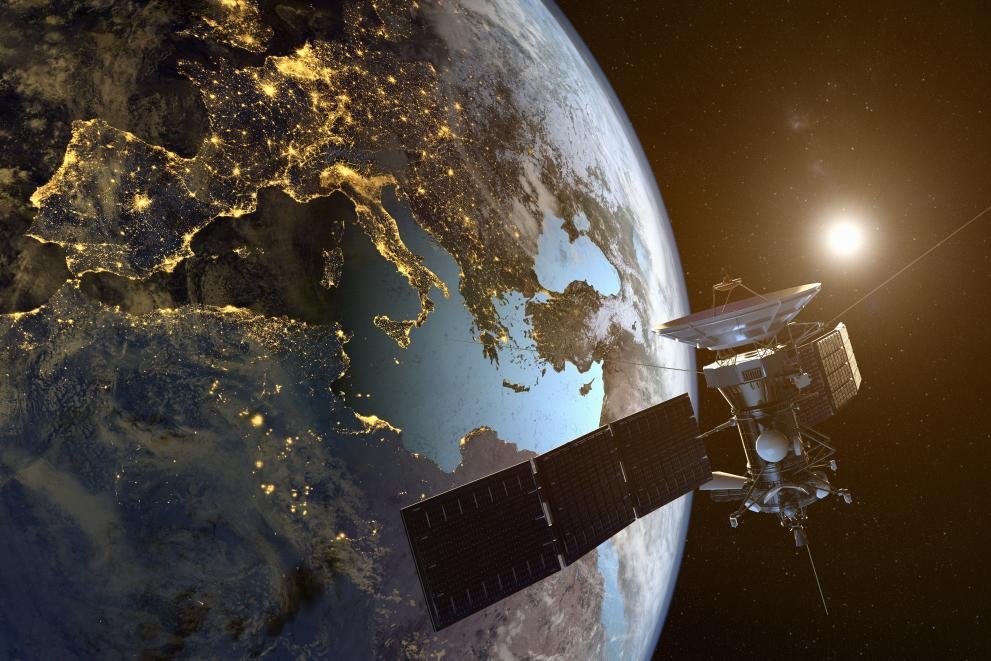
You’re floating hundreds of miles above Earth, the planet a blue marble glowing below. Satellites drift past in silent formation. One of them—an aging communications satellite, long overdue for retirement—gets a second chance. A robotic tanker docks gently, pumps in fresh fuel, and just like that, five more years of life are unlocked. No replacement needed. No billion-dollar launch.
A little further out, on the Moon, a drill punches into lunar soil. Ice becomes water, water becomes hydrogen and oxygen, and suddenly there’s fuel—made on the Moon. No more rocket fuel hauled up from Earth. No more treating orbit like a final stop.
This isn’t science fiction. It’s already underway.
Welcome to the next phase of the space economy: in-orbit services and manufacturing (ISM) and in-situ resource utilization (ISRU). These aren’t just new acronyms. They’re the backbone of a new space infrastructure—one that makes operating in space as normal as operating on Earth.
And the race to build it is already on.
From Launch Pads to Lifelines: Why ISM and ISRU Matter
For most of spaceflight’s history, the model was dead simple and brutally expensive:
- Launch everything from Earth.
- Burn most of your fuel just escaping the atmosphere.
- Pray that your satellite or spacecraft survives as long as possible.
- When it fails? Launch another one.
But that model is cracking under pressure.
There are more satellites than ever. Cost constraints are real. Missions are longer. And the Moon is no longer just a flagpole target—it’s becoming a logistics hub. The problem? Moving everything from Earth is inefficient and wildly expensive.
ISM and ISRU flip that equation.
What ISM Unlocks:
- Refueling satellites in orbit
- Extending mission life through repair and servicing
- Clearing out dangerous debris
- Manufacturing and assembling structures in zero gravity
- Producing parts on-demand instead of preloading them all on Day 1
What ISRU Enables:
- Mining lunar or asteroid resources
- Extracting water for fuel, life support, and drinking
- Turning regolith into usable metals
- Building infrastructure from local materials
This is the shift: Earth becomes the backup plan. Space begins to supply itself. The launch is no longer the mission—it’s just the start of the supply chain.

A Glimpse Into What’s Coming
These projections are based on current market research and trends. None are guaranteed.
- On-orbit servicing could top $5 billion by 2030
- Orbital manufacturing—from fiber optics to semiconductors—could become a multi-billion-dollar sector this decade
- Lunar ISRU might support long-term Moon bases by the early 2030s
- Refueling depots could become standard, making single-use satellites obsolete
- Massive telescopes and space habitats may soon be built in orbit—because they’re too big to survive launch from Earth
True or not, the trend is undeniable:
Space is moving from exploration… to infrastructure.
And every infrastructure wave—railroads, highways, internet—creates new titans.
The 5 Companies Building the Foundations
This isn’t just theoretical. A handful of companies—some lean, some legacy—are laying the groundwork right now.
1. Astroscale
Specialty: Satellite servicing, debris cleanup, and life extension
Why it matters: Their spacecraft can rendezvous, inspect, dock with, and stabilize satellites that would otherwise become space junk.
Impact: Replacing a dead satellite costs $200M+. Extending its life for a fraction of that? Game-changer.
Infrastructure role: The AAA roadside service of orbit.
2. Orbit Fab
Specialty: On-orbit refueling
Why it matters: Their fuel ports and tankers turn satellites into serviceable assets.
Impact: Most satellites don’t die from technical failure—they run out of gas.
Infrastructure role: The gas stations of space. Whoever controls the fuel… controls the lanes.
3. Redwire Space
Specialty: Orbital manufacturing and assembly
Why it matters: From 3D printing on the ISS to solar arrays and composite materials, Redwire is turning microgravity into a manufacturing advantage.
Impact: Some things are just better built in space. They’re proving it can be done at scale.
Infrastructure role: The first real factories in orbit.
4. Honeybee Robotics
Specialty: Resource extraction systems for the Moon and Mars
Why it matters: Their drills and extractors are built for lunar regolith, Martian soil, and asteroid rock. NASA already flies their hardware.
Impact: Water becomes oxygen, fuel, and life support. Rock becomes building material.
Infrastructure role: The mining equipment of the off-Earth economy.
5. Airbus (Space & Defence Division)
Specialty: Large-scale space architecture and servicing
Why it matters: This isn’t a scrappy startup. It’s a global heavyweight investing early in orbital servicing and in-space assembly.
Impact: Big companies entering niche markets is how industries go mainstream.
Infrastructure role: The blueprint printer with the capital to scale it.
Top 3 Market Movers Right Now
These insights are based on public filings and industry reports, not guaranteed financials.
- Redwire (Ticker: RDW) – Public. Scaling fast. Big commercial and government contracts.
- Astroscale – Public in Japan. Proven tech. Well positioned as debris removal becomes regulation, not option.
- Orbit Fab – Private. Valuation rising. Backed by top-tier aerospace investors. Refueling missions in the pipeline.
These companies show the strongest mix of momentum, confidence, and revenue pathways.
Why Rockets Are Just the Trucks
Rockets make headlines. Launch videos go viral. But that’s not where the long-term money is.
The real value is in what happens after the launch:
- The logistics hubs
- The fuel depots
- The repair bays
- The assembly lines
- The mines and processors
Rockets are trucks. ISM and ISRU? They’re the roads, gas stations, and factories.
Every major industry we’ve built followed this pattern:
- Railroads needed rail
- Cars needed roads
- Planes needed airports
- Phones needed data centers
Now, space needs servicing, supply chains, and self-reliance.
Reality Check: Not Everyone Makes It
This isn’t a guaranteed gold rush. There are real hurdles:
- Rendezvous and docking remain complex, high-risk ops
- ISRU is mostly in the prototype phase
- Market size predictions range wildly
- Space law—especially about property rights—is still murky
- Most of these players depend on government contracts
- Aerospace timelines? They always slip
So yeah—this is frontier territory. Smart investors will verify claims, not just ride the hype.
But those who bet right? They’re backing the first layer of a trillion-dollar economy.
The Space Economy Starts With Infrastructure
We’re entering a decade where space isn’t just a place we visit—it’s a place we work.
And that shift demands new rules, new tools, and new systems.
The companies building in-orbit services and off-world supply chains aren’t chasing dreams. They’re building the real-world plumbing of an economy that never touches Earth.
If even half these forecasts hold, ISM and ISRU won’t just be footnotes in space history—
They’ll be the reason the space economy exists at all.