Post 2
Chapter 2 — The Key That Chose Her For a moment, Aisha couldn’t move.The silver key rested in her palm, warmer now, as if it had been waiting for her touch. A faint vibration pulsed through her fingers—gentle, but impossible to ignore. The world around her was still unnaturally quiet. No animals. No distant car. Not even the usual whisper of the night breeze. It felt like time itself was holding still. Aisha swallowed, forcing herself to breathe. Then it happened. The houses around her flickered—like someone had switched reality on and off for a split second. The old street, the cracked walls, the empty windows… all blurred into a haze of light and shadow. A soft, unfamiliar voice echoed inside her mind. “Finally… the seeker has arrived.” Aisha spun around, heart racing, but no one was there. The voice wasn’t coming from behind her. It wasn’t coming from anywhere. It was inside her—clear and calm. She tightened her grip on the key. “Who’s there?” she whispered. No answer. Instead, the key glowed brighter, lighting up the road beneath her feet. The glow stretched forward, forming a thin, shining trail—like a path made of light—leading deeper into the darkness of the street. Aisha took a hesitant step back. The glowing path pulsed once, almost impatiently. It wanted her to follow. Her mind screamed to run home, to throw the strange thing away and forget this night ever happened…But her heart?Her heart knew this was the beginning of something she could never escape. Taking a deep breath, Aisha stepped onto the path of light. And the moment she did, the world shifted again—this time completely. Everything went white.
Post 1 ” Local vs National Dry Ice Supply “
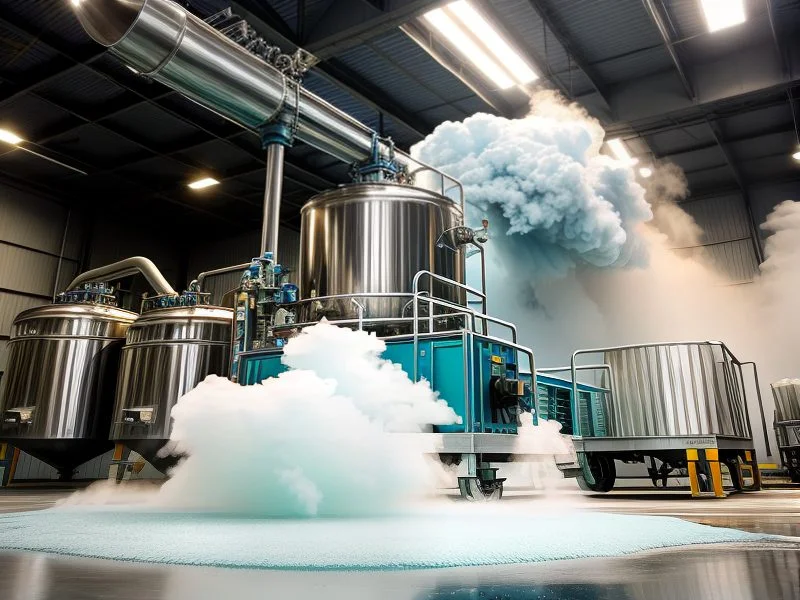
Local vs National Dry Ice Supply: What’s Best for Your Lab? If you’re responsible for frozen logistics, one big question sits underneath all the SOPs and tracking spreadsheets: Where should we buy our dry ice? Do you use a local producer who’s close enough to know your first names, or a large national supplier whose nearest depot might be half a day’s drive away? Here’s a straight-talking look at both – with a clear explanation of why, for most labs in our region, local supply simply works better. The case for local dry ice 1. Fresher product, less sublimation loss Dry ice is constantly disappearing. Once it leaves the production line, the clock is ticking. With a genuinely local producer: At Grabbit & Chill, we produce in Cottenham and deliver in our own vehicles – often within a couple of hours – so the dry ice you buy is the dry ice you actually receive. 2. Rapid response and real emergency cover Timelines in the lab don’t always behave themselves. Flights move. Couriers get delayed. Patients cancel or are added at the last minute. A good local supplier can: For clinical trials, transplant work and urgent diagnostics, that responsiveness isn’t a “nice to have” – it’s critical. 3. Smaller, more frequent drops (that match reality) The “one huge pallet a week” model looks efficient on a spreadsheet. On site, it can mean: With a local producer, you can: Instead of drowning in dry ice on Monday and running short by Thursday, you get a steady, predictable flow. 4. Lower carbon footprint and better story to tell Shorter road miles mean: If your organisation has net zero, ESG or ISO14001 targets, switching to a local producer is one of the easier wins: fewer HGV miles, more efficient use of CO₂, and a supply chain you can actually explain to auditors. The reality of national suppliers There are situations where a national supplier has a role – but it’s worth being honest about what you’re likely to experience day to day. 1. “Consistency”… from a distance On paper, national suppliers offer: In practice, that can come with: If your main headache is operational flexibility, national can make that worse, not better. 2. Capacity for very large volumes (if you really need it) If one or more of your sites genuinely consumes tonnes of dry ice per week, a big national plant might make sense for that part of your operation. But most research labs, hospitals and regional diagnostics centres aren’t in that category. They need reliable, responsive supply, not a tanker. 3. Bundled services… with strings Some national players can package dry ice with: The flip side is you can end up: If you just need good, fresh dry ice delivered when you actually use it, all of that can be unnecessary complexity. The hidden costs behind the “cheap” price per kilo When quotes land, it’s tempting to skim straight to price per kilo and circle the lowest number. But the real cost picture includes: A slightly higher per-kilo price from a good local supplier is often more than offset by: The sensible question is: “What does this cost us per successful shipment, not per kilo on a quote?” So what actually works best? For most labs and hospitals in our region, we see the same pattern: Some larger organisations keep a national framework in place but route their critical, time-sensitive lanes through a local producer because they know they’ll get: Where Grabbit & Chill fits in If you’re in or around Cambridge / East of England, we’re set up to be exactly that local partner: If you’re currently relying on a national supplier for everything, it’s well worth trialling a local option alongside them and comparing what actually happens: Bring us your lanes, volumes and pain points – and we’ll show you what a genuinely local dry ice supply looks like.